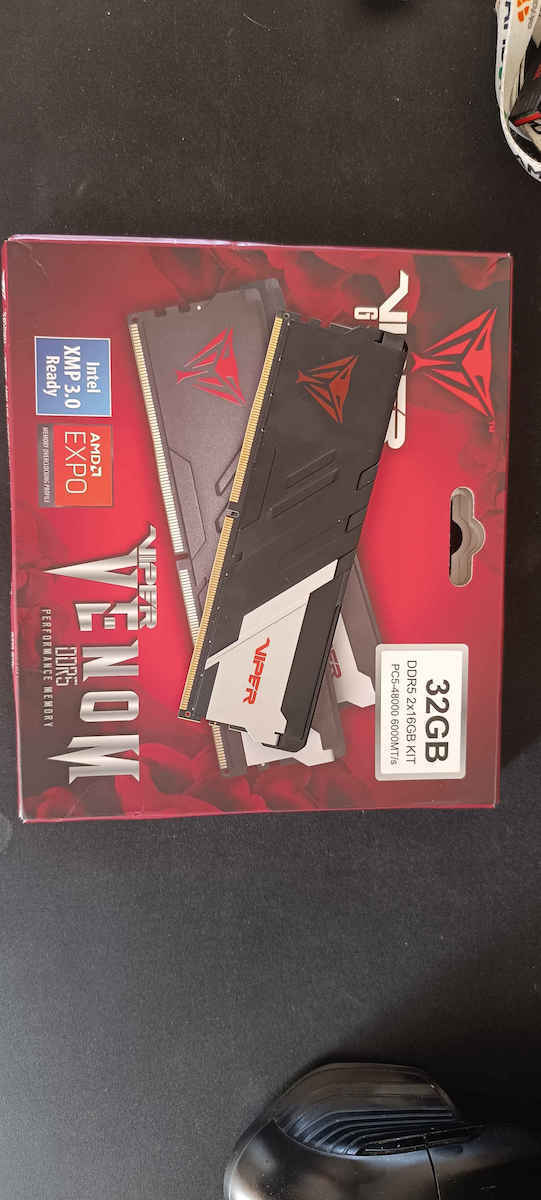
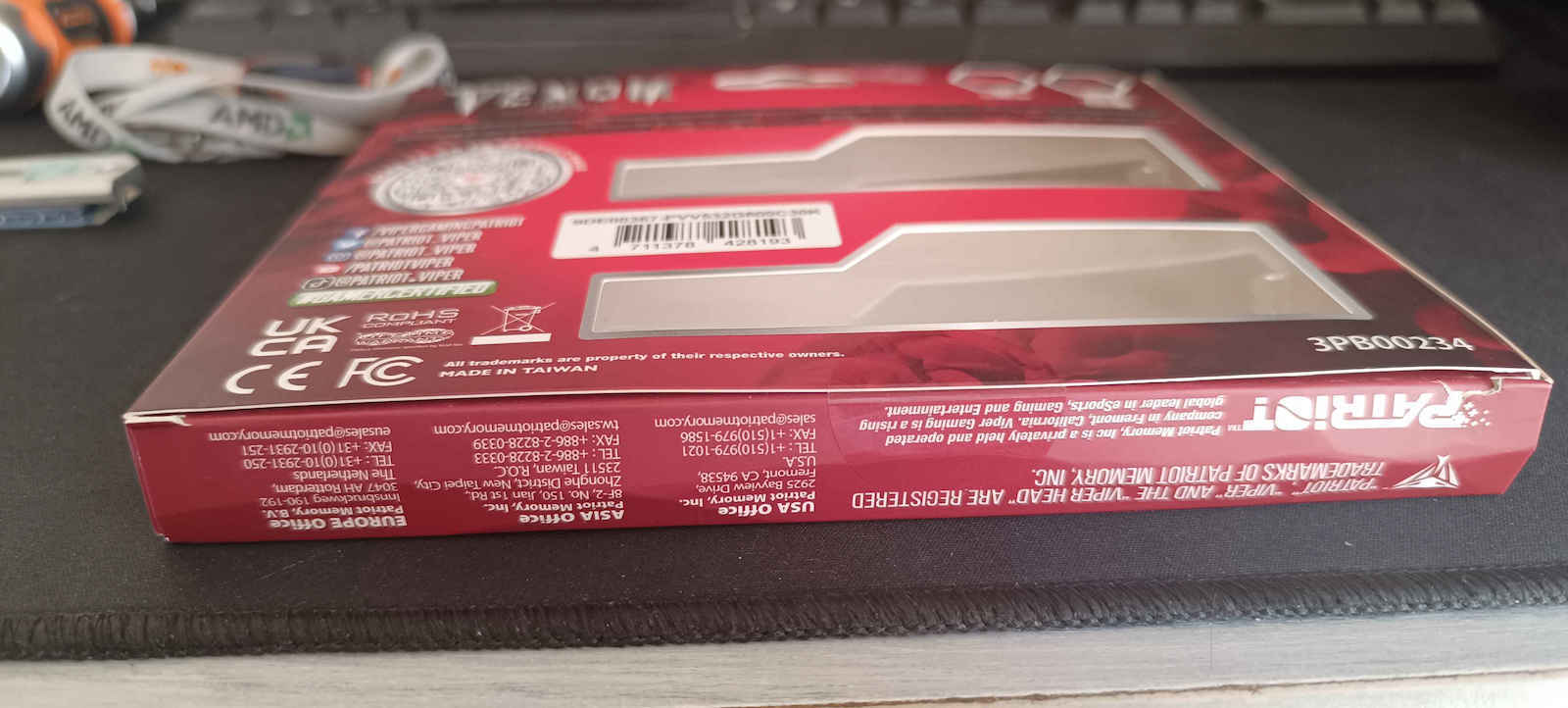
Von einem Freund für das Mainboard Gigabyte B860 DS3H WIFI6E mit Intel 1851 Sockel und Intel Ultra 7 265K Prozessor gekauft, hat nie funktioniert, obwohl es auf einem älteren Intel-Mainboard (mit anderem Sockel) und i9-13900K Prozessor einwandfrei lief. Ein Upgrade des Mainboards (mit anderen RAM-Modulen) auf das neueste BIOS hat ebenfalls nicht geholfen. Schließlich stellte sich heraus, dass das Problem darin bestand, dass diese speziellen RAM-Module, obwohl sie Ende 2025 hergestellt wurden, nicht mit dem Speichercontroller der neuen Ultra-Prozessoren kompatibel sind. Letztendlich mussten andere RAM-Module verwendet werden.
Die entsprechende Analyse von Gemini:
Hier sind die genauen Zeilen aus Ihrem Dump, die beweisen, warum dieses Kit auf Ihrer B860-Plattform nicht funktioniert:
1. Die veraltete Chip-Dichte
Aus Ihrem Dump: Modul-Dichte: 8192 Mb & Geräte-Breite: x8
Was es bedeutet: Das bedeutet, dass Ihr RAM mit 8Gb (1 Gigabyte) Speicherchips gebaut wurde. Moderner Desktop-DDR5 ist vollständig auf 16Gb (2GB) oder 24Gb (3GB) Chips ausgelegt. Intels Arrow Lake-Speichercontroller hat die native Unterstützung für diese erste Generation von 8Gb Basisschaltungen explizit eingestellt.
2. Das unkonventionelle Dual-Rank-Layout
Aus Ihrem Dump: Anzahl der Ränge: 2
Was es bedeutet: Da Patriot winzige 1GB-Chips verwendet hat, um einen 16GB-Riegel zu bauen, mussten diese in zwei physische Ränge auf einem Modul gestapelt werden. Ein heutiger 16GB-Riegel ist immer Single-Rank. Das Einbauen eines Legacy-Dual-Rank-Layouts in einen brandneuen Arrow Lake-SoC-Speichercontroller führt während der Initialisierung sofort zu einem elektrischen Berechnungsfehler.
3. Das Low-Current-Stromversorgungskonzept
Aus Ihrem Dump: PMIC0 Typ: Kleiner PMIC (Niedriger Strom)
Was es bedeutet: Der Power Management IC auf Ihren Modulen ist ein älterer IDT PMIC5100, der für geringe Stromaufnahme ausgelegt ist. Wenn Ihr Core Ultra CPU versucht, die Stromleitungen für seine neue Split-Tile-Architektur auszugleichen, kann dieser Low-Current-PMIC die einzigartigen Spannungs-Handshake-Anforderungen der LGA1851-Plattform nicht bewältigen.
Dieses RAM-Kit ist grundsätzlich inkompatibel mit Ihrem neuen Prozessor und Mainboard. Keine Software-Änderung, BIOS-Update oder Cross-Flash kann die physische Verkabelung der Chips verändern.
Αγορασμένη από φίλο για μητρική Gigabyte B860 DS3H WIFI6E με Intel 1851 Socket και επεξεργαστή Intel Ultra 7 265K, δεν λειτούργησε ποτέ, παρότι σε παλιότερη Intel μητρική (με άλλο socket) και επεξεργαστή i9-13900K λειτούργησε κανονικά. Αναβάθμιση της μητρικής (με άλλες μνήμες) στο τελευταίο BIOS επίσης δεν βοήθησε. Και τελικά το πρόβλημα φάνηκε να είναι ότι οι συγκεκριμένες μνήμες, παρότι κατασκευής τέλους του 2025, δεν μπορούν να συνεργαστούν με τον ελεγκτή μνήμης των νέων Ultra επεξεργαστών. Τελικά χρειάστηκε να χρησιμοποιηθούν άλλες μνήμες.
Η σχετική ανάλυση από το Gemini:
Here are the exact lines from your dump that prove why this kit will not work on your B860 platform:
1. The Obsolete Chip Density
From your dump: Module Density: 8192 Mb & Device Width: x8
What it means: This means your RAM is built using 8Gb (1 Gigabyte) memory chips. Modern desktop DDR5 is designed entirely around 16Gb (2GB) or 24Gb (3GB) chips. Intel's Arrow Lake memory controller explicitly dropped native architecture support for these first-generation 8Gb baseline dies.
2. The Unconventional Dual-Rank Layout
From your dump: Number Of Ranks: 2
What it means: Because Patriot used tiny 1GB chips to build a 16GB stick, they had to stack them into two physical ranks on a single module. A standard 16GB stick today is always Single-Rank. Shoving a legacy Dual-Rank layout into a brand-new Arrow Lake SoC memory controller causes an immediate electrical calculation error during initialization.
3. The Low-Current Power Setup
From your dump: PMIC0 Type: Small PMIC (Low Current)
What it means: The Power Management IC on your sticks is an older IDT PMIC5100 designed for low-current draws. When your Core Ultra CPU tries to balance the power lines for its new split-tile architecture, this low-current PMIC cannot handle the unique voltage handshakes required by the LGA1851 platform.
This memory kit is fundamentally incompatible with your new processor and motherboard. No software tweak, BIOS update, or cross-flash can alter the physical wiring of the silicon chips.